Abstract:
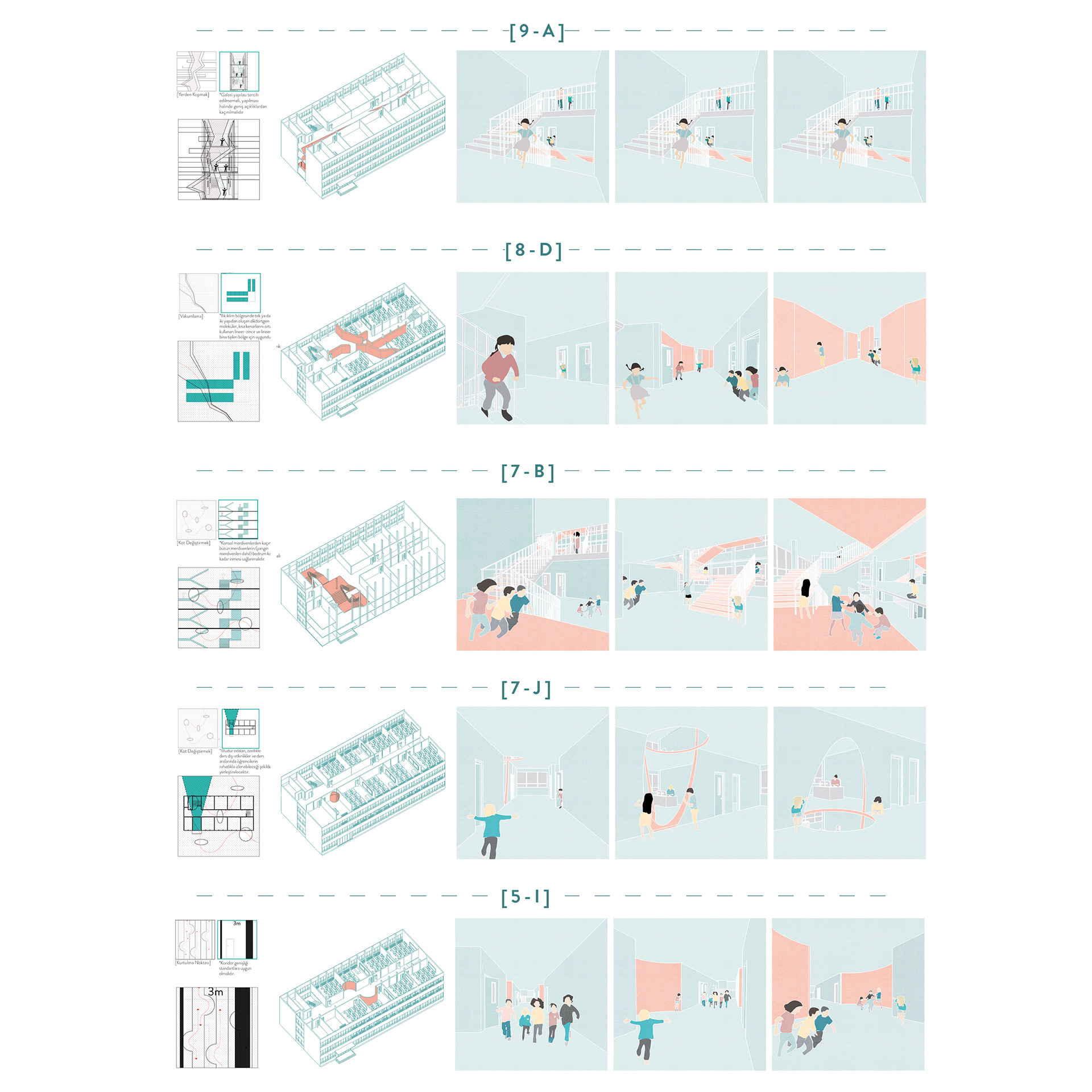
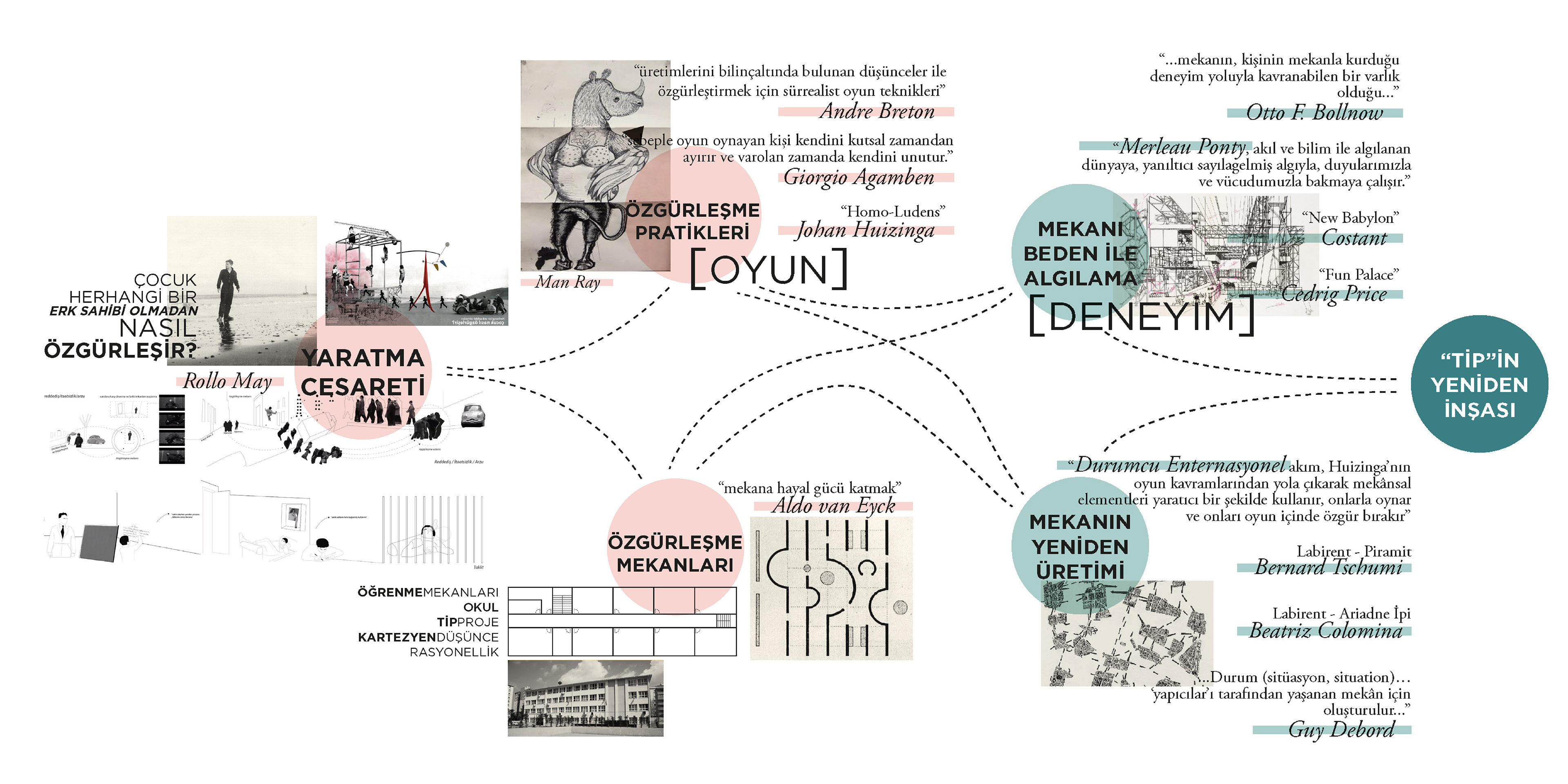
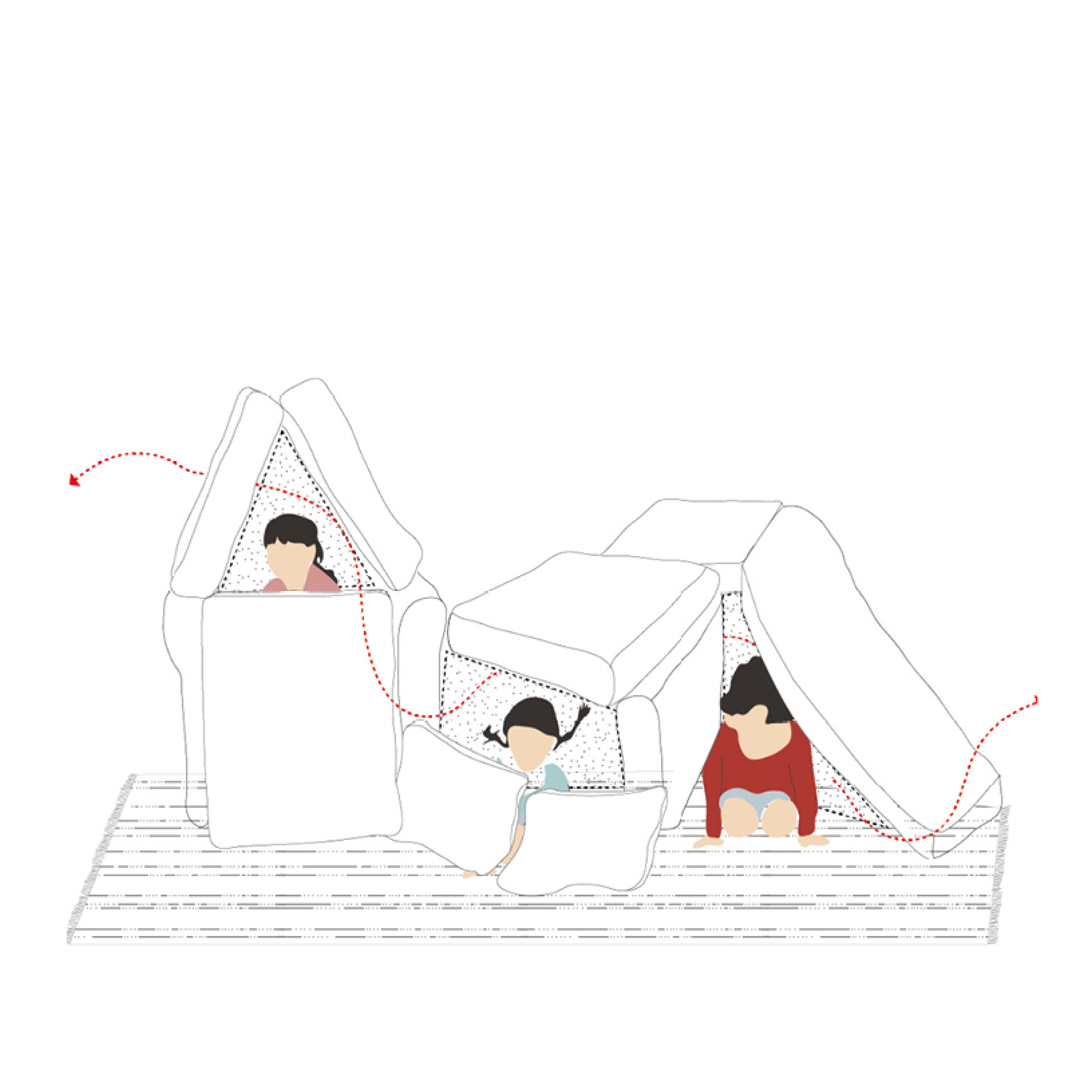
This reseacrh discusses the potentials of play practices in terms of spatial production and the possibilities to reshape The Typical Elementary School Project applications with those potentials. The research argues the subject into two main lines; the first is taking school as ‘free’ space, and the second is to approach the play phenomena as a multiplier of possibilities. Initially, the historical background and spatial arrangements of the Typical Elementary School Project are investigated. The Design Manual for Elementary Schools, which prepared by the Ministry of Education for constructing The Typical Elementary School in 2015, defines rational design principles based only on numerical and mathematical data. After discussing the theoretical framework of the play as a generator of new potentials and possibilities, the rules of the design manual are compared with play practices. The comparison of typical school design principles and children’s play practices reveals a contradiction between the spatial organization of the typical school projects and playing experiences of children. The rules of the Design Manual and the play practices were diagrammed. These two contradictory diagram sets have been juxtaposed to multiply the possibilities of spatial production.