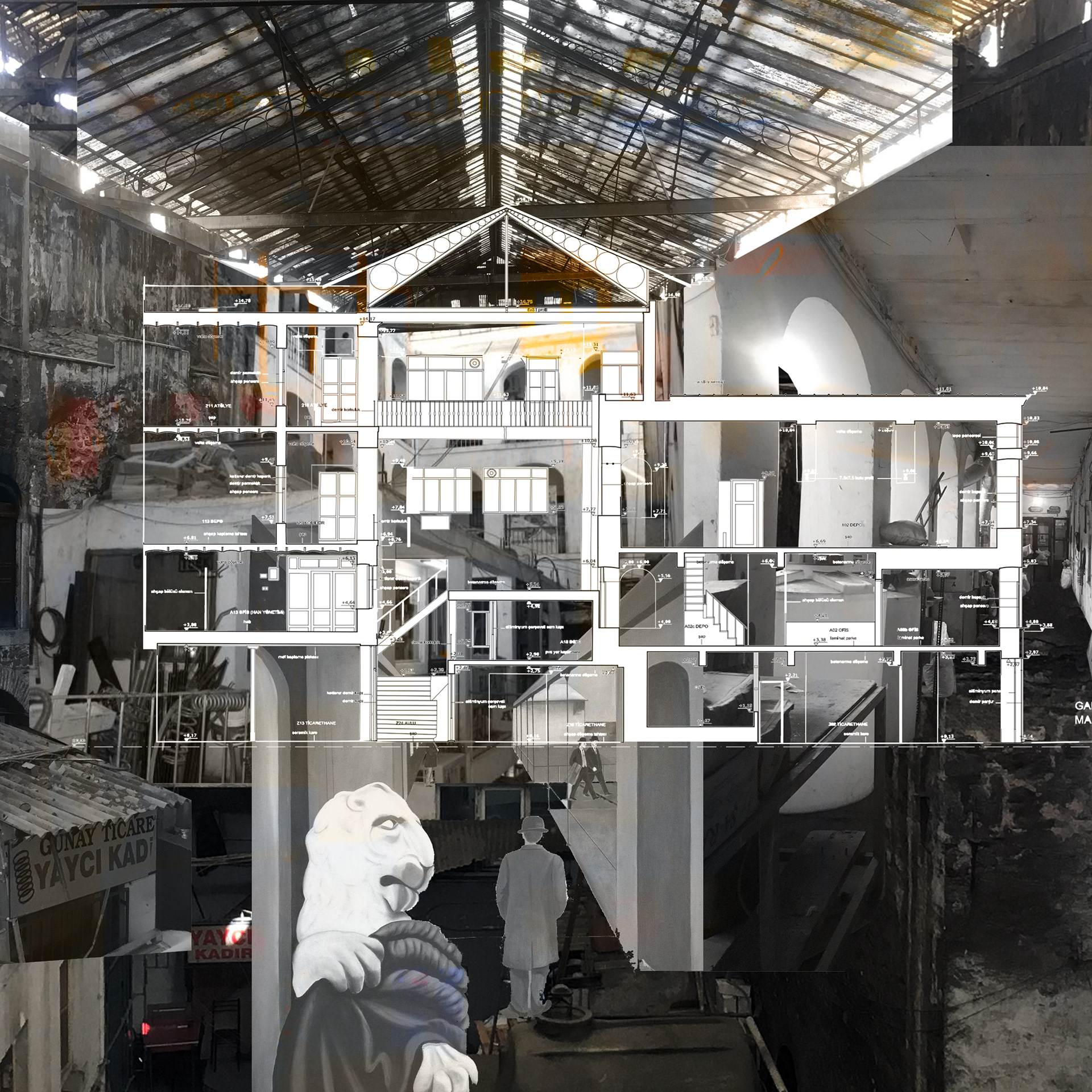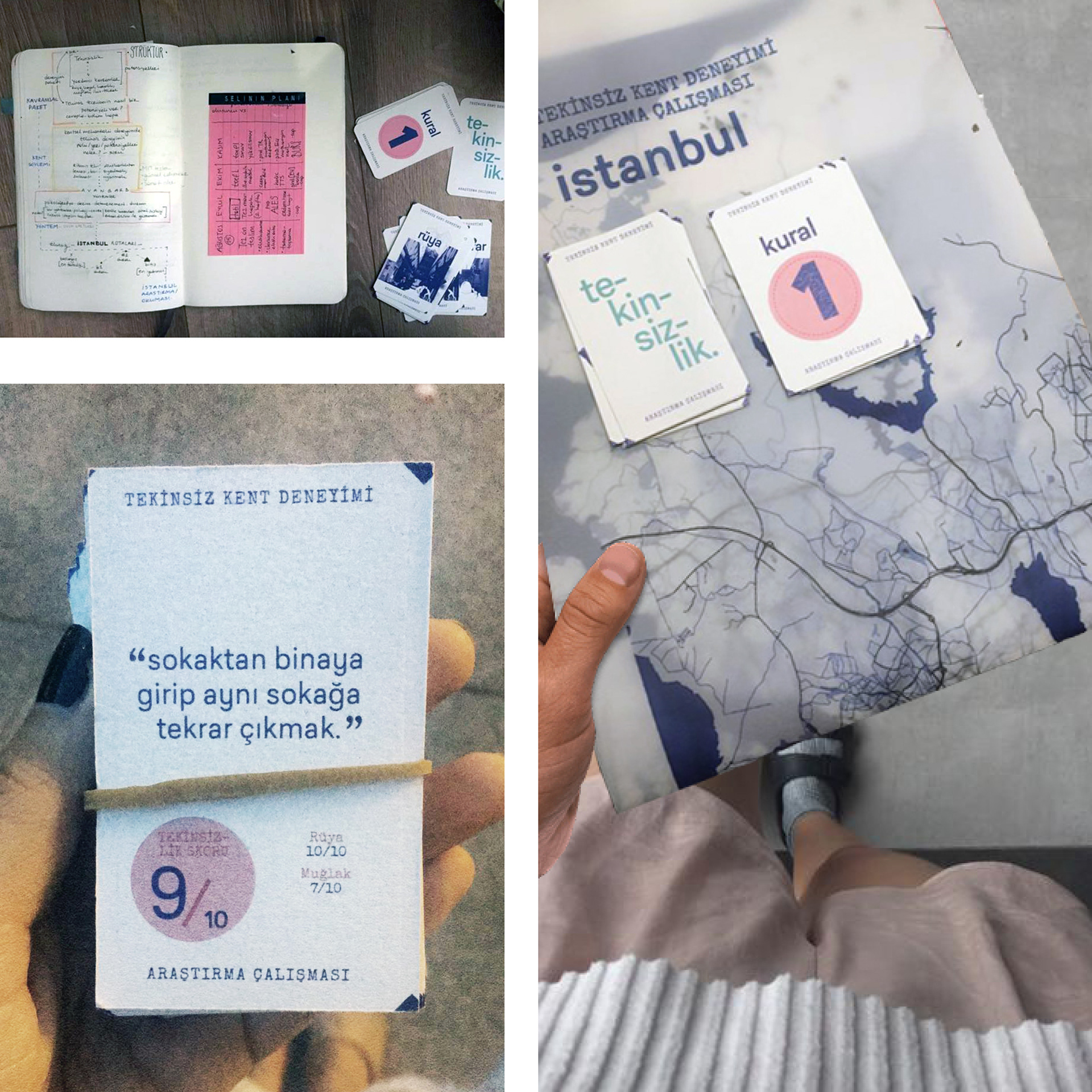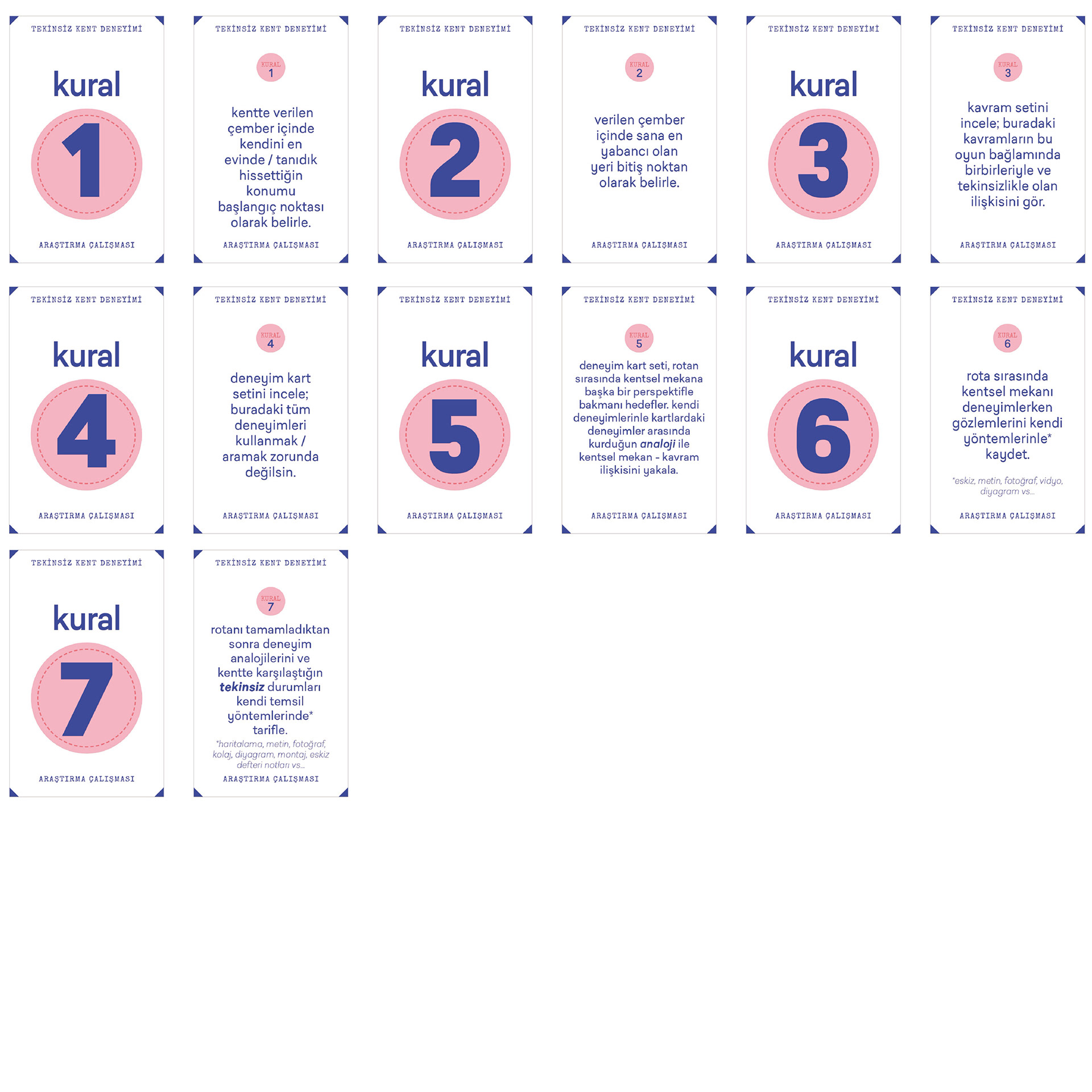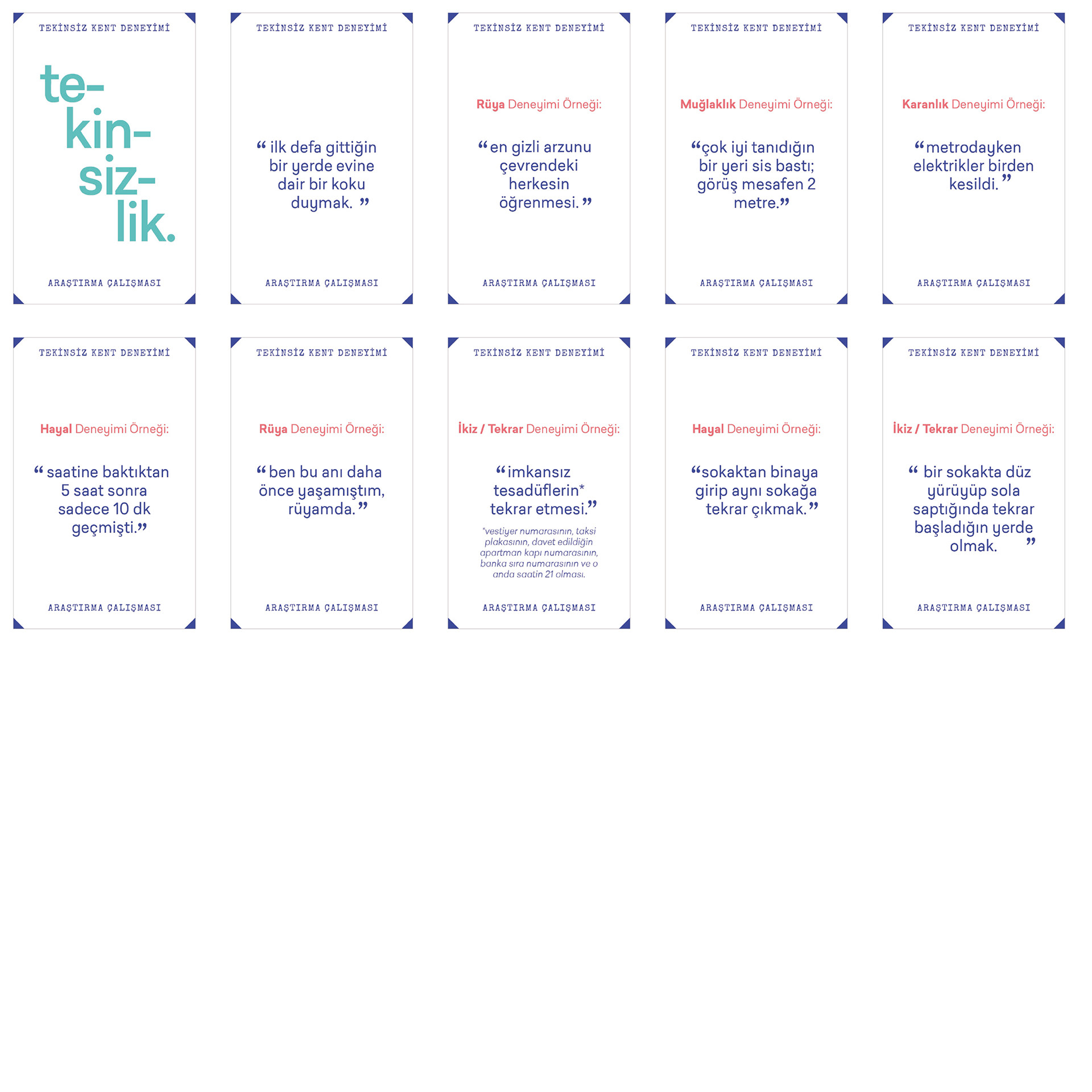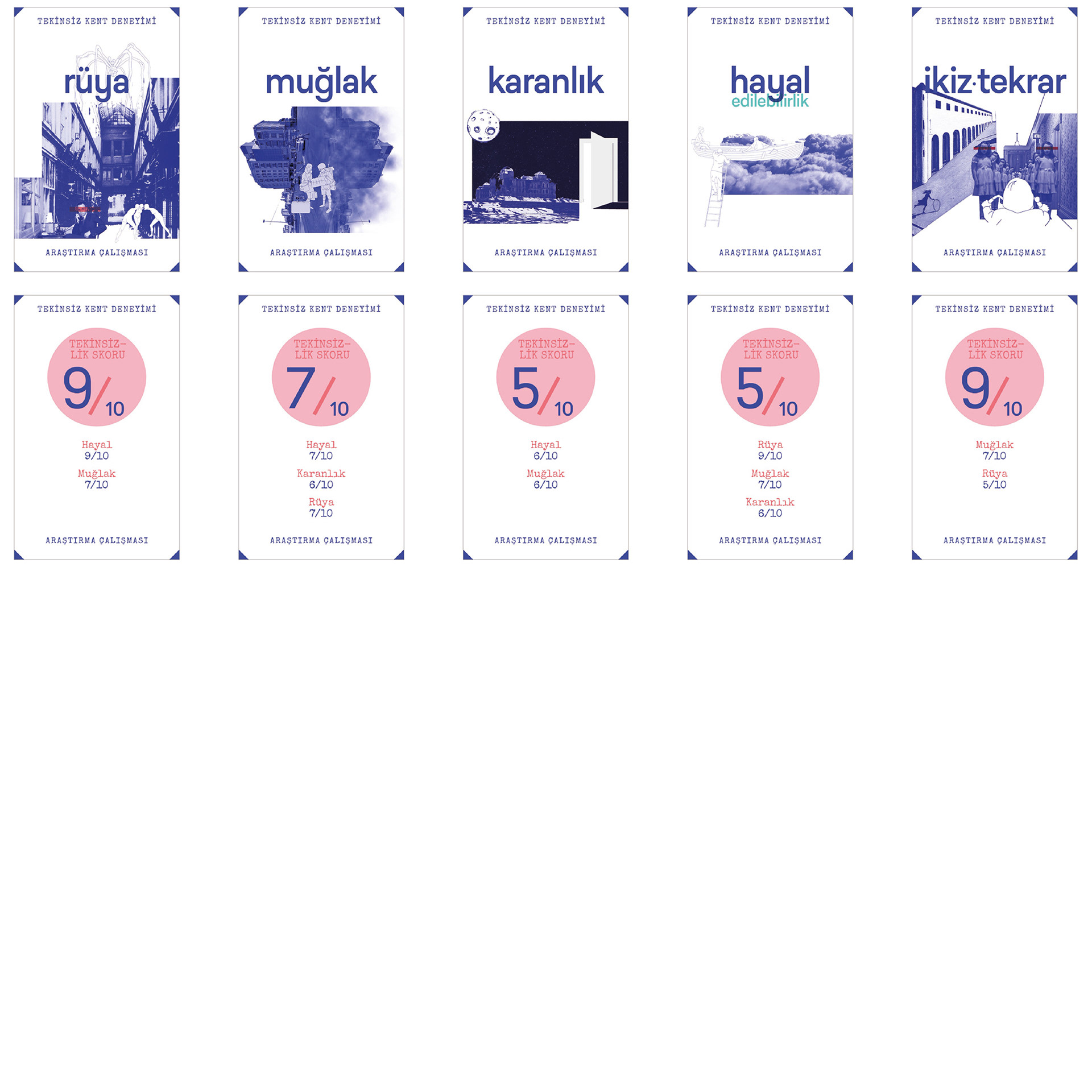
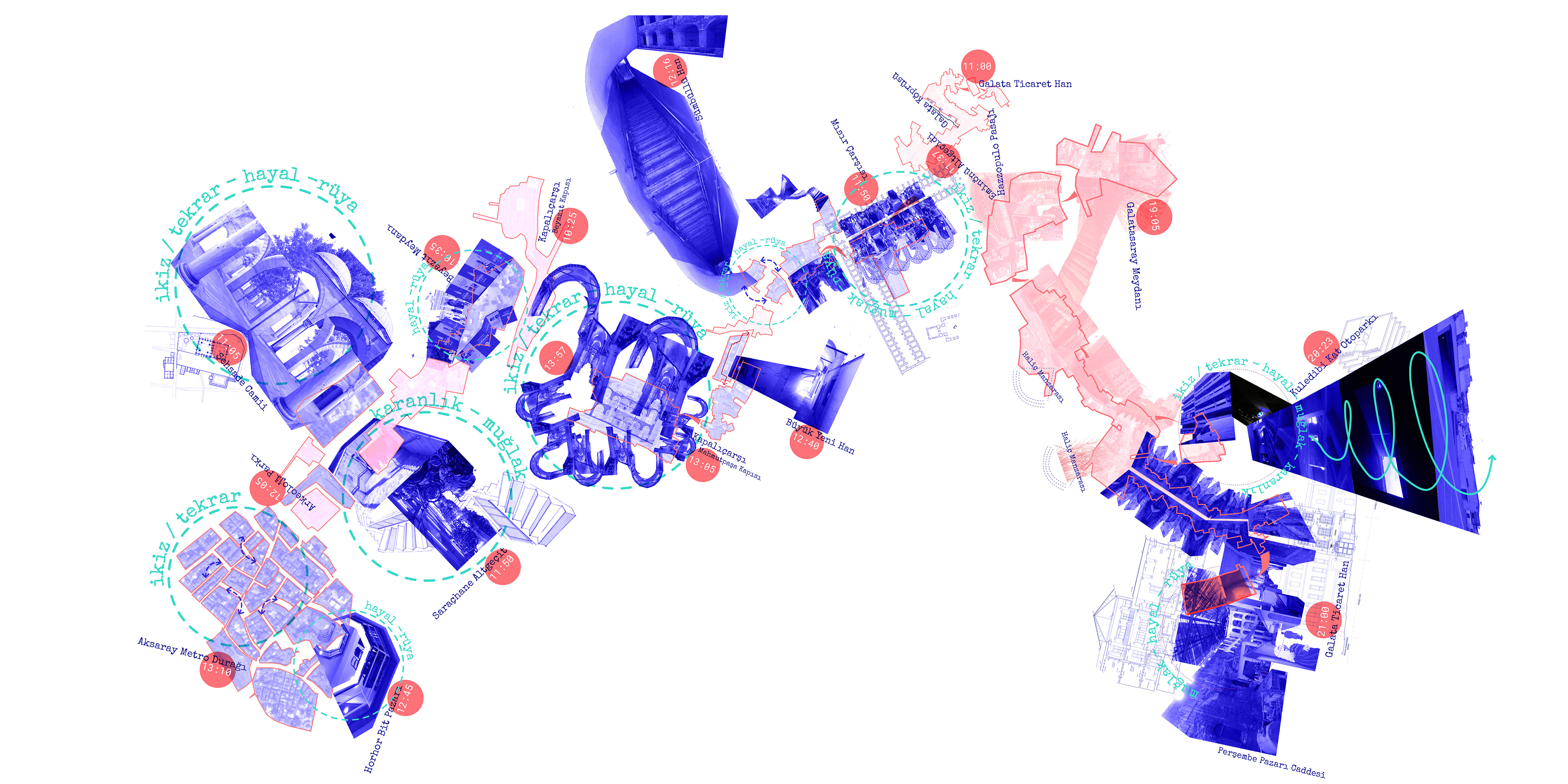
In my master's thesis, I focused on the concept of the uncanny in Istanbul. Employing a psychogeographic method, I designed a card game that allows everyone to conduct their own uncanny Istanbul investigation. Through the card game and theoretical readings, I produced Uncanny Istanbul mapping.
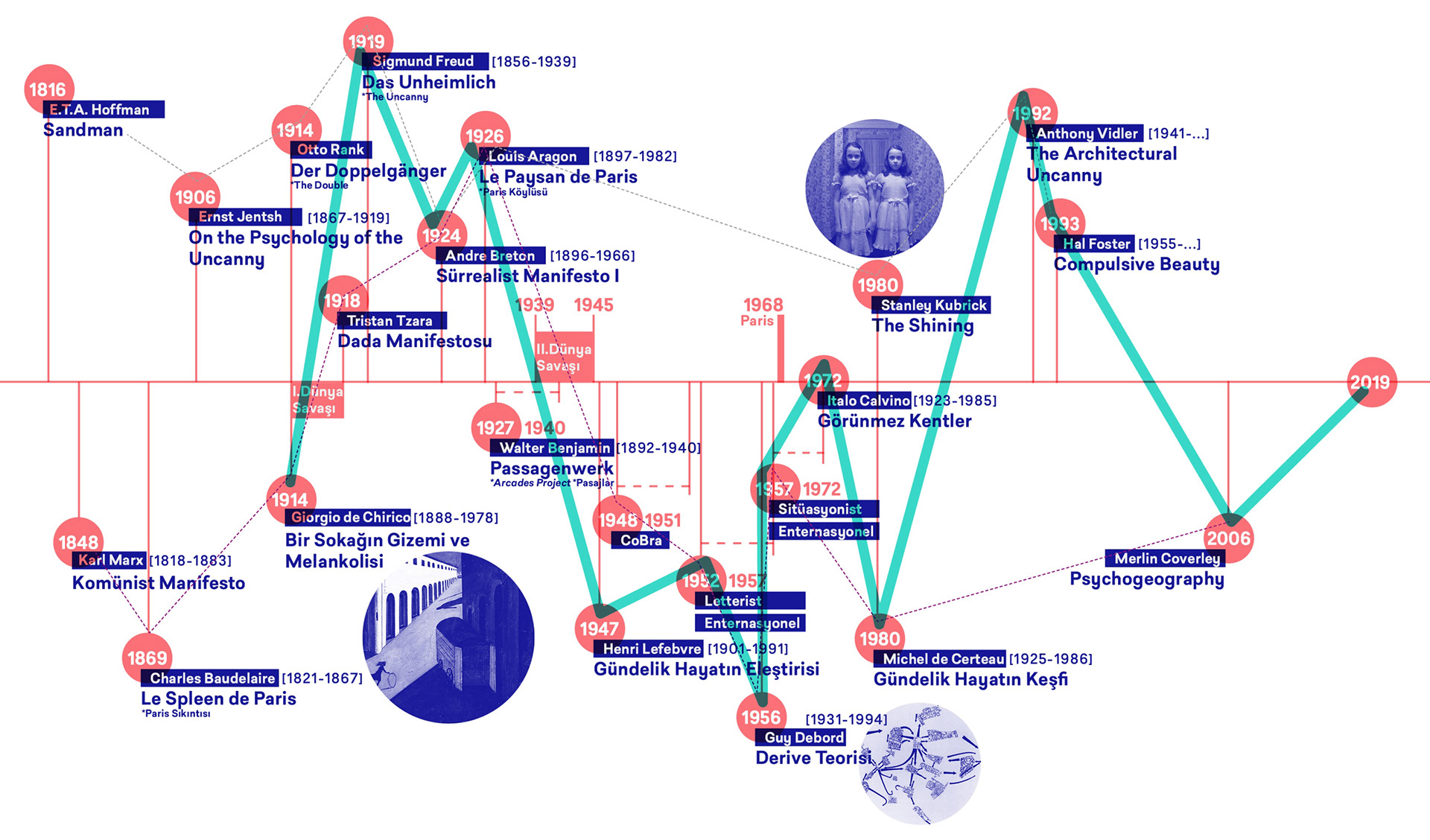
This research leads to the discussion of the production of urban space through the uncanny experience via mapping the city. The uncanny, which conceptualized by Sigmund Freud, is opened to discussion to understand the urban space, but not with a negative perception. The potential of the uncanny experience in urban space has similarities with the effects of the avant-garde groups derive, detournement and psychogeography practices. The Avant-garde groups -such as Surrealists, Letterist and Situationist Internationals- describe the impact of these practices as waking up and re-building new awareness of urban space. These impacts have similarities with uncanny experience. To uncover and to dig up the uncanny experience in the urban landscape, the theoretical background of uncanny and methodological research from the avant-garde groups were both re-shaped and designed as a game called Uncanny Urban Investigation İstanbul.
The game is a kind of uncanny experience detective in urban space- it consists of three sets of cards and a map of İstanbul. As an output of the game, players are expected to map their uncanny experiences of urban space.
The game called Uncanny Urban Investigation İstanbul works as an interface to transform personal experience into architectural and urban space knowledge through mapping. The research aims to open up a fresh discussion area that will allow new speculations, trials and readings for urban space experience instead of producing a didactic and finished discourse on the examples of the uncanny experience in the city. In this era of visual and spectacle hegemony, this research tries to demonstrate new methods and perspectives in uncovering the hidden - invisible layers of urban space.